
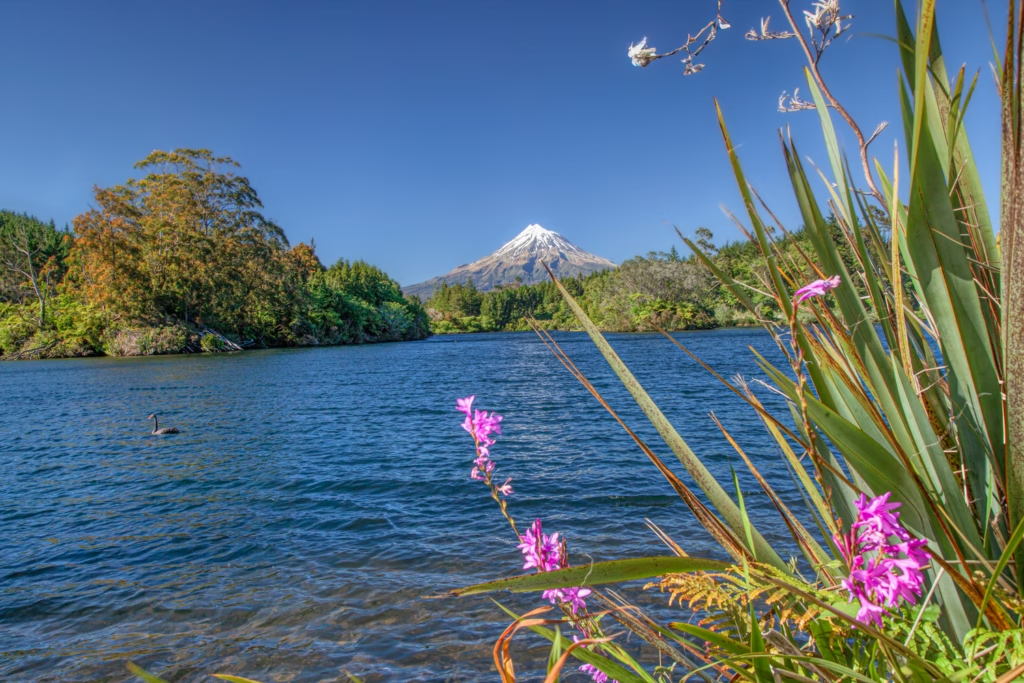
Taranaki Maunga
Aotearoa
Elevating Te reo Māori Connects Me to Home!
“Saving indigenous languages is crucial to ensure the protection of the cultural identity and dignity of indigenous peoples and safeguard their traditional knowledge.”
UN Department of Economic and Social Affairs (UNDESA)
I am Pākehā — a non-Māori New Zealander — and Tangata Tiriti o Aotearoa, a person of the Treaty of Waitangi.
You may have seen the following phrase in my email signature or elsewhere and followed a link to this page wondering what it means.
Tangata Tiriti o Aotearoa — Māori ki te ao
Tangata Tiriti means “People of the Treaty.” It refers to non-Māori who belong to Aotearoa New Zealand through the rights and responsibilities granted under Te Tiriti o Waitangi. Being Tangata Tiriti recognises that Māori are Tangata Whenua — the People of the Land — and that my citizenship and my place in Aotearoa and in the world is based on Te Tiriti and a relationship of respect, honour, and shared responsibility under the Treaty.
The phrase above represents my respect and support for te reo Māori, the Indigenous language of Aotearoa New Zealand. The language has faced generations of violent suppression and is once again under political attack today.
As Pākehā, I acknowledge that te reo Māori is not my language by ethnicity, but it is part of my heritage — shared by the goodwill of Māori through Te Tiriti o Waitangi. I am not fluent, far from it — but I love te reo and I have committed to using it more, with pride. Even far from home in Canada, te reo connects me to Aotearoa and affirms its importance in my life. It also shows solidarity with Māori — Tangata Whenua – the Indigenous people of Aotearoa. And by extension, it reflects my solidarity with First Nations here on Turtle Island (North America), who continue to face their own struggles for language, culture, and land.
Māori ki te ao means “Māori to the world” — a call for Māori language and culture to be visible, valued, and shared everywhere.
Ngā mihi,
Chris